How to Set Up Webhooks for Microsoft Teams
Last updated February 26, 2026
Introduction
You can use Microsoft Workflows to automatically post Neat Pulse notifications and alerts to a Microsoft Teams channel. This is a simple way to monitor device health, sign-in status, and other key events without leaving Teams.
Neat Pulse supports the Adaptive Card format to ensure that messages to Microsoft Teams channels are properly formatted.
This guide walks you through:
- Creating a new workflow in Microsoft Workflows
- Adding a webhook trigger for incoming Pulse events
Note: The Incoming Webhooks for Teams app was deprecated in December 2025 and while it might work, we don’t recommend that you use it.
To learn how to set up a webhook for Slack, see the article: How to Set Up Webhooks for Slack.
Contents
Step 1. Prerequisites
To complete this setup, you’ll need:
- Access to the Microsoft Workflows app inside Teams
- Permission to create workflows in your organization
- A Microsoft Teams channel to post messages into
- A Neat Pulse account with Owner access
Step 2. Set Up Microsoft Teams
- Ensure that you have a Microsoft Teams channel that you want your webhook messages to be posted to. If not, start by creating a new channel.
- From the side menu of your Teams app, open the Workflows app.
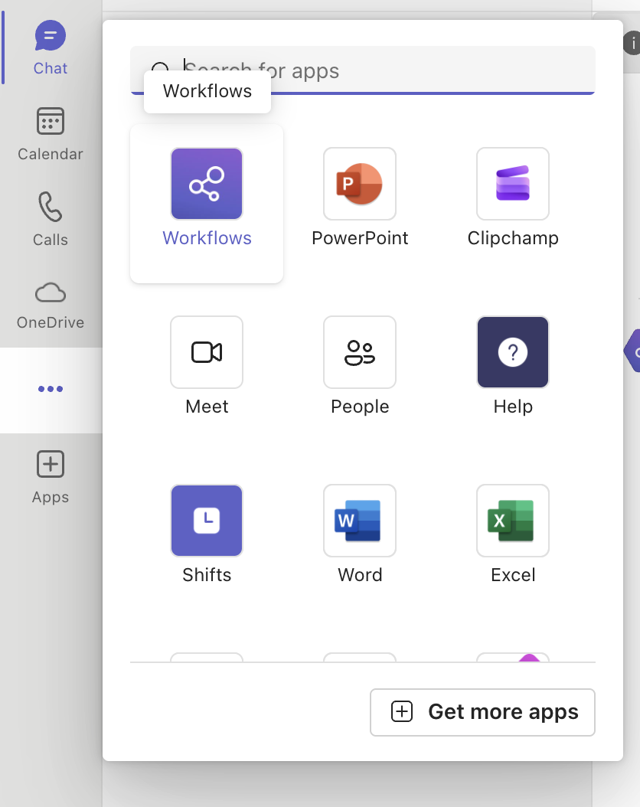
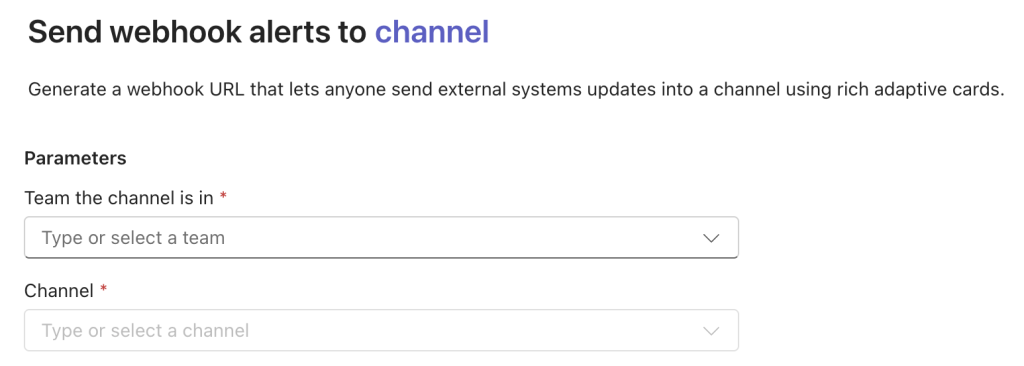
- Click Templates and search for the Send webhook alerts to channel template.

- Select the Team and the channel in that Team that you want to send messages to. Click Save.
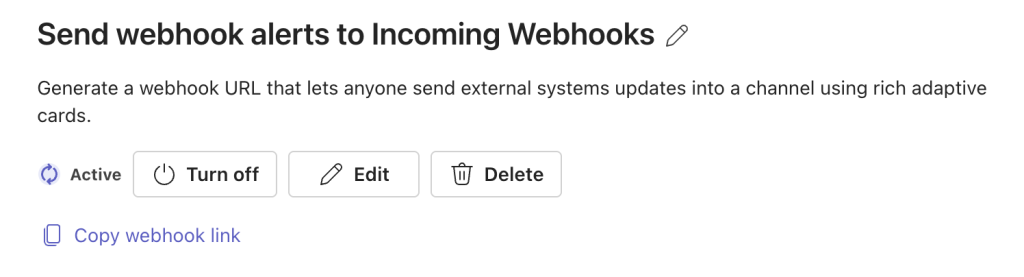
- In the next screen, click Copy webhook link. Optionally, you can rename your webhook to something more descriptive using the pencil icon to edit.
Step 3. Set up Neat Pulse
- In Neat Pulse, go to Settings → Alerts and Events.
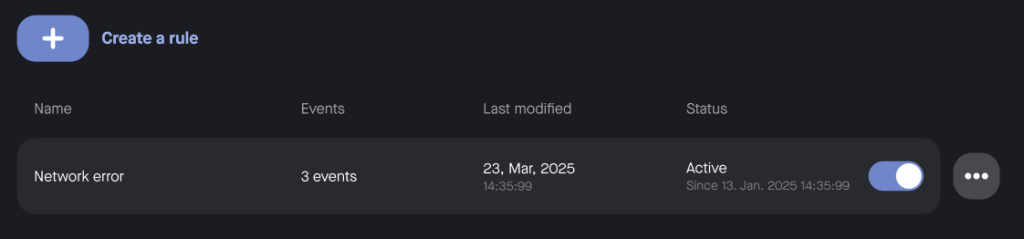
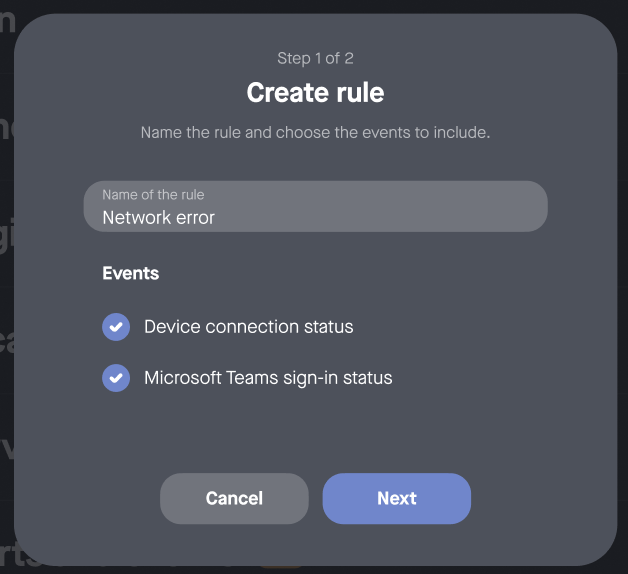
- Click Create rule. Name the rule and select what events you want to subscribe to (see Figure 2).
- Click Next.
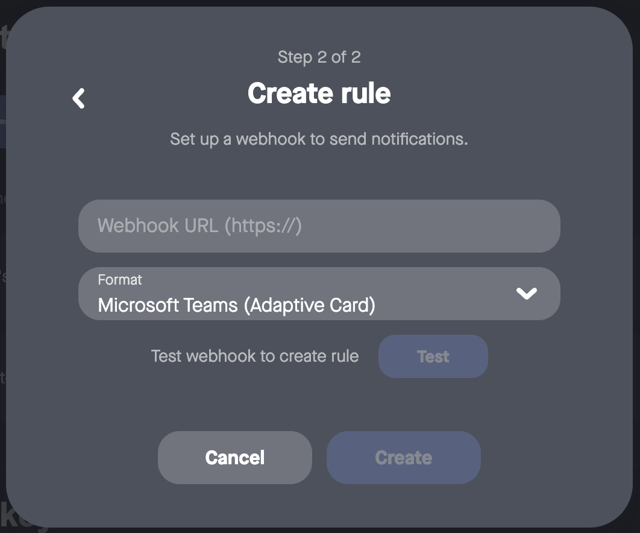
- To set up the webhook to send notifications, paste the webhook URL you copied from your Microsoft Teams Workflow (Figure 4), and choose Microsoft Teams (Adaptive Card) as Format from the drop-down options (see Figure 6).
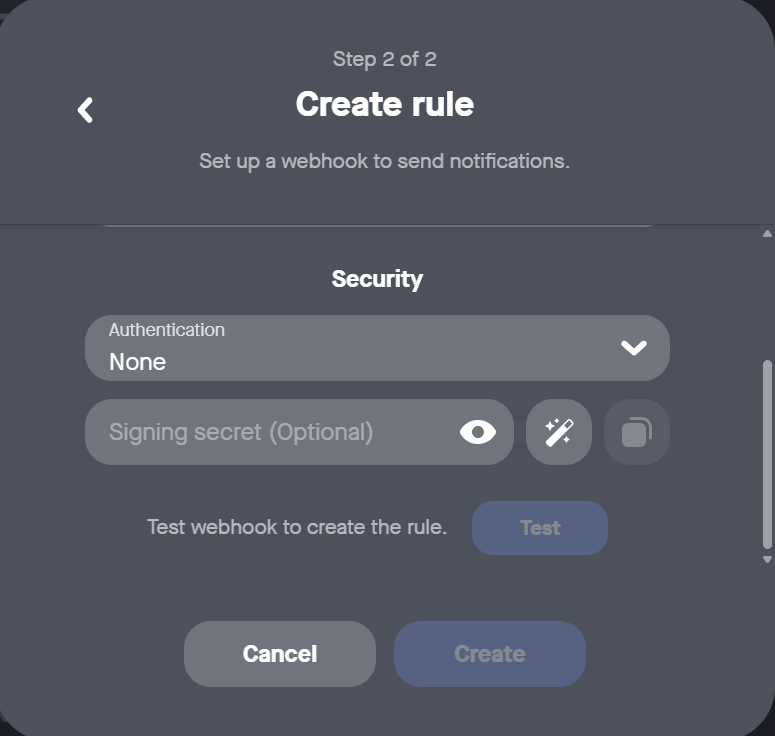
- Scroll the side bar to select the Security options, see Figure 7. Select your method of authentication from the drop-down list and the Signing secret (optional); for more info on these fields, see Authentication and Signing.
- Click Test. If the test succeeded, open your Microsoft Teams channel to see the test message.
- Go back to Pulse and click Create.
For more info on how to register a webhook using API, see this section, How to register a webhook.
Your webhook is now configured both in Microsoft Teams and in Neat Pulse.
- New webhooks are deactivated by default. In Neat Pulse, click the toggle to activate the webhook and start receiving events (see Figure 8).
You will see the newly created rule and any associated events listed under Settings → Alerts and Events, from where you can also change the status and reconfigure.